
Snippets: Rethinking Science Education | From Memorization to Exploration
 Photo by Artem Podrez on Pexels.com
For decades, science classrooms around the world have shared a common formula: lectures, textbooks, and exams built around memorization. Students learn definitions, formulas, and historical discoveries, yet many graduate without a real sense of curiosity or wonder about how science actually works. The problem isn’t a lack of intelligence or effort; it’s that the traditional system often teaches what to think, rather than how to think.
The new frontier in science education aims to change that. Instead of seeing science as a fixed body of facts, educators are reframing it as a process, an ever-evolving way of asking questions, testing ideas, and discovering connections. Programs like PSLE science tuition from Scienceshifu are helping young learners develop this mindset early, encouraging them to explore, experiment, and truly understand the “why” behind what they study.
The Legacy of Memorization-Based Learning
For much of the 20th century, science education mirrored the industrial age: efficient, standardized, and focused on producing measurable outcomes. Students memorized formulas, periodic tables, and the names of famous scientists. The goal was mastery of information, not mastery of inquiry.
This approach had its benefits. It ensured a shared foundation of knowledge and discipline. But it also had limits. Memorization often divorces knowledge from context, turning vibrant ideas into dry recitations. Students might recall that Newton formulated the laws of motion, but they may not understand the creative process that led him to these laws, or how those laws apply to the world around them.
The result? Many learners grow up seeing science as distant, difficult, or reserved for “geniuses,” rather than as a tool for curiosity that everyone can use.
Curiosity as the Engine of Learning
At its core, science is about curiosity. Every discovery, from the structure of DNA to the laws of thermodynamics, began with a question. Children naturally possess this curiosity; anyone who’s watched a child ask “why?” a hundred times in a row knows this well.
The challenge is not teaching curiosity, but preserving it. By the time students reach middle or high school, that innate wonder often fades under the weight of rote learning and test preparation.
Modern educational reformers argue that science teaching should rekindle the habits of inquiry. Instead of starting with facts, teachers can start with mysteries, phenomena that spark questions. Why does ice float? How does a rainbow form? What happens when ecosystems are disrupted? When students begin by asking their own questions, the learning process becomes active, personal, and enduring.
From Laboratories to Living Classrooms
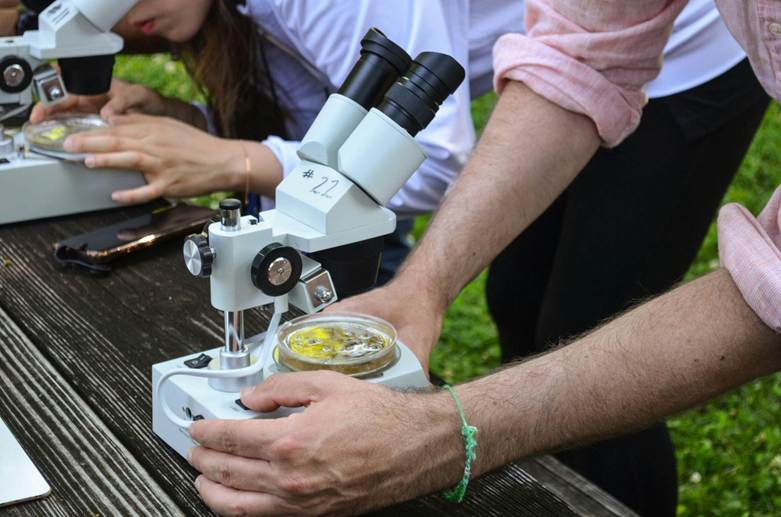
Traditional labs have their place, but many are overly scripted: step-by-step instructions that lead to predictable results. Exploration-based learning, by contrast, encourages experimentation, even failure. It invites students to design their own tests, interpret results, and debate what they mean.
Some schools have adopted “maker spaces,” where students build prototypes and test materials to understand physics or engineering concepts firsthand. Others have moved learning outdoors, using local environments as living laboratories. A riverbank can teach ecology and chemistry. A city park can reveal lessons in biodiversity, climate, and pollution.
The beauty of this model is that it makes science tangible. When students see that the principles they study explain real-world phenomena, from cooking to climate change, they stop asking “Why do I need to know this?” and start asking “What else can I find out?”
Interdisciplinary Thinking: Science Beyond the Silo
One of the biggest shifts in education is the move toward interdisciplinarity. Real-world problems don’t fit neatly into biology, chemistry, or physics, and neither should classroom learning.
Consider the challenge of renewable energy. Understanding it requires knowledge of chemistry (how batteries store energy), physics (how turbines convert motion into electricity), and environmental science (how ecosystems respond to change). Add economics and ethics, and it becomes a truly holistic subject.
This approach mirrors how professional scientists work, collaborating across fields. When students learn to see connections rather than boundaries, they begin to understand that science isn’t just a subject; it’s a way of interpreting the world.
Technology and the New Tools of Discovery
Digital technology has revolutionized how students access and engage with science. Simulations now let learners model planetary motion, test chemical reactions safely, or visualize molecular structures in 3D. Augmented reality (AR) can place the solar system in the palm of a student’s hand, while virtual reality (VR) allows them to walk through the human bloodstream or explore deep-sea ecosystems.
These tools don’t replace curiosity; they amplify it. By providing immersive experiences, they help students grasp abstract concepts that might otherwise remain theoretical.
But technology’s role extends beyond visualization. Online databases, open-source projects, and citizen science platforms allow students to contribute to real research. A teenager today can analyze telescope data for exoplanet discovery or help track climate patterns using open NASA datasets. The classroom has expanded into the world itself.
Assessment for Understanding, Not Repetition

Photo by Vitaly Gariev on Unsplash
If the goal of science education is exploration, assessment must evolve too. Traditional tests reward recall, not reasoning. Students may memorize the steps of the scientific method but fail to demonstrate its application.
New assessment models prioritize inquiry-based evaluation. Instead of asking, “What is photosynthesis?” teachers might ask, “How would you design an experiment to measure photosynthesis under different light conditions?”
Portfolios, project-based evaluations, and reflective journals are gaining traction as ways to measure comprehension and growth. These methods reward persistence, problem-solving, and creativity , skills far more valuable than short-term memory.
The Role of Teachers as Guides, Not Gatekeepers
In an inquiry-driven model, the teacher’s role shifts from authority figure to facilitator. Rather than delivering answers, they model the process of discovery, showing that uncertainty and error are integral to learning.
This change requires confidence and adaptability. Teachers must be willing to say, “I don’t know , let’s find out together,” a phrase that empowers students to take intellectual risks. It also means designing classrooms that encourage collaboration over competition.
When students feel safe to experiment, question, and even fail, they begin to internalize one of the deepest truths of science: progress is built on persistence, not perfection.
Science for the Next Generation of Thinkers
The world today faces complex challenges, from climate change to pandemics to artificial intelligence. Solving them will require citizens who can think critically, analyze data, and approach problems with creativity and compassion. Science education, therefore, isn’t just about producing scientists; it’s about cultivating informed, thoughtful people capable of evidence-based decision-making.
The next generation doesn’t need to memorize every element on the periodic table. They need to know how to ask better questions, gather reliable information, and connect ideas across disciplines. In short, they need to experience science the way scientists do, as a living, evolving adventure of the mind.


 The Ranting Panda
Rant here!