
Snippets: Slowing Down in Siena | The Italian ‘City Of Love’
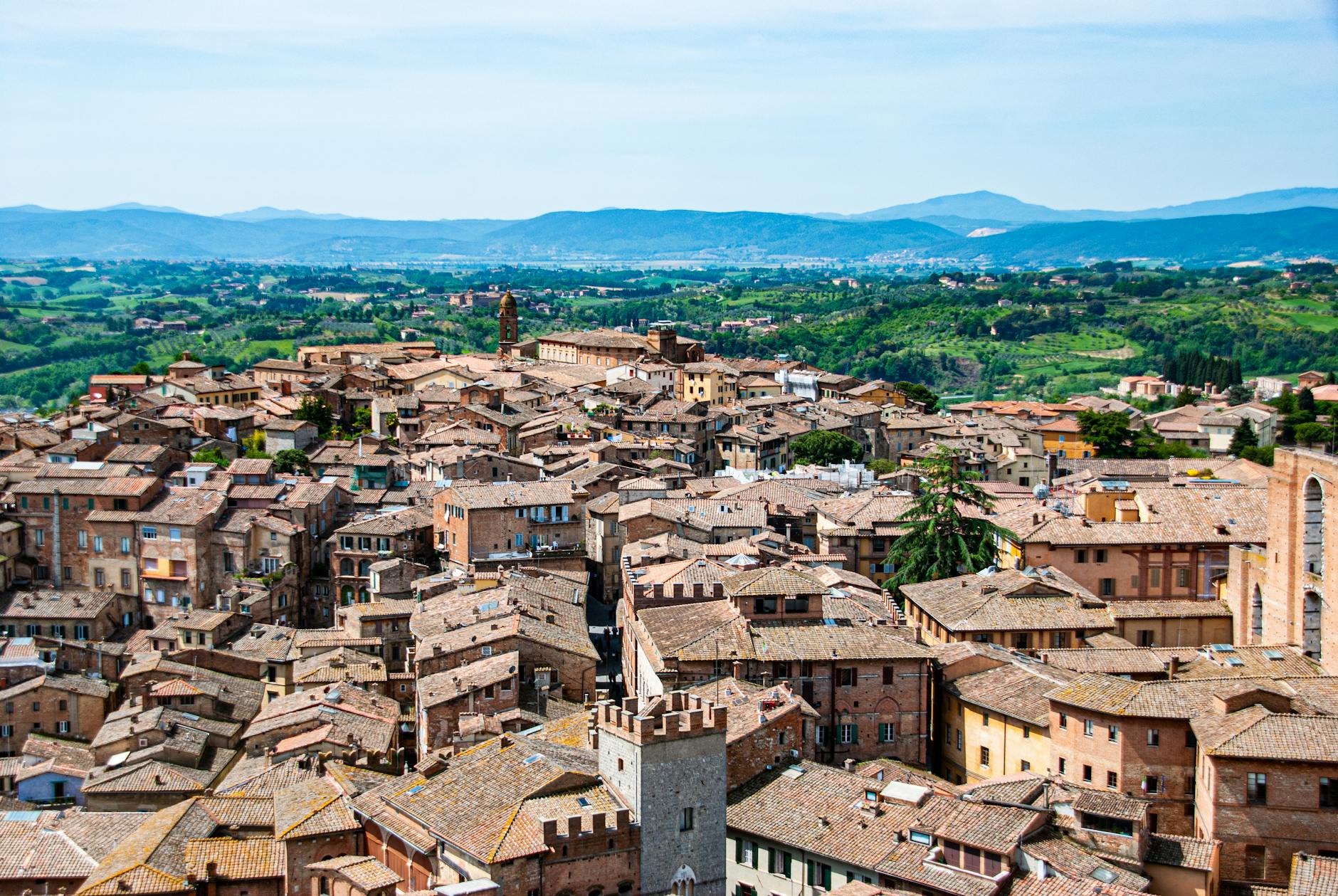 Photo by Siegfried Poepperl on Pexels.com
Italy often brings to mind a frantic energy. Vespas buzz through traffic in Rome, tourists crowd the bridges of Venice, and fashionistas strut down the boulevards of Milan. Yet, nestled in the Tuscan hills, Siena offers a different rhythm. It is a place where the medieval walls seem to hold back the rush of modern life, preserving a pace that feels centuries old. This is not a city for checking boxes off a list. It is a city for sitting, watching, and breathing.
Travelers often arrive here with packed itineraries, cameras ready to snap every monument before rushing to the next train. Many will capture stunning clips which they may look to refine with Clideo video editing tools, the true magic of Siena reveals itself only when the lens cap stays on. The city demands presence. The burnt sienna bricks, the very color named after this place, glow warm in the afternoon sun, inviting visitors to match the leisurely stride of the locals.
A Medieval Time Capsule
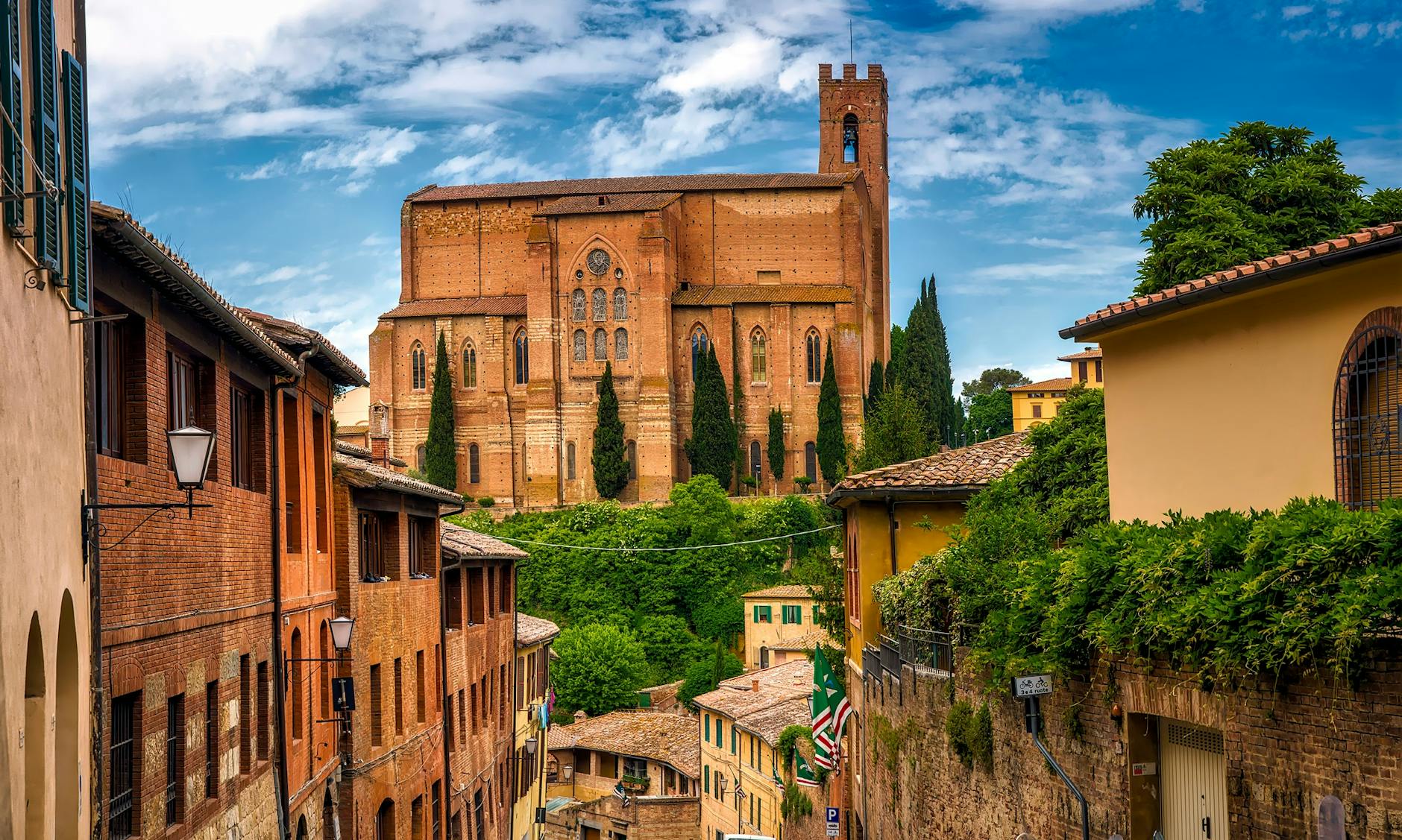
Siena stands on three hills, a position that once gave it a strategic advantage and now gives it breathless views. Unlike Florence, which embraced the Renaissance with open arms, Siena clung to its Gothic roots. Walking through the massive gates feels like stepping into the 14th century. The architecture is not just a backdrop; it is a statement of identity.
Historic Street Design: Siena’s streets are narrow and winding, built long before cars ever existed.
Car-Free Historic Center: Vehicles are largely banned from the old city, instantly reducing noise and congestion.
A Quieter Soundscape: Instead of engines and horns, the city is filled with human sounds, footsteps on stone, café conversations, and church bells.
Naturally Slower Pace: With no traffic rushing through, life in Siena moves at a calmer, more relaxed rhythm.
The Shell-Shaped Heart of Tuscany
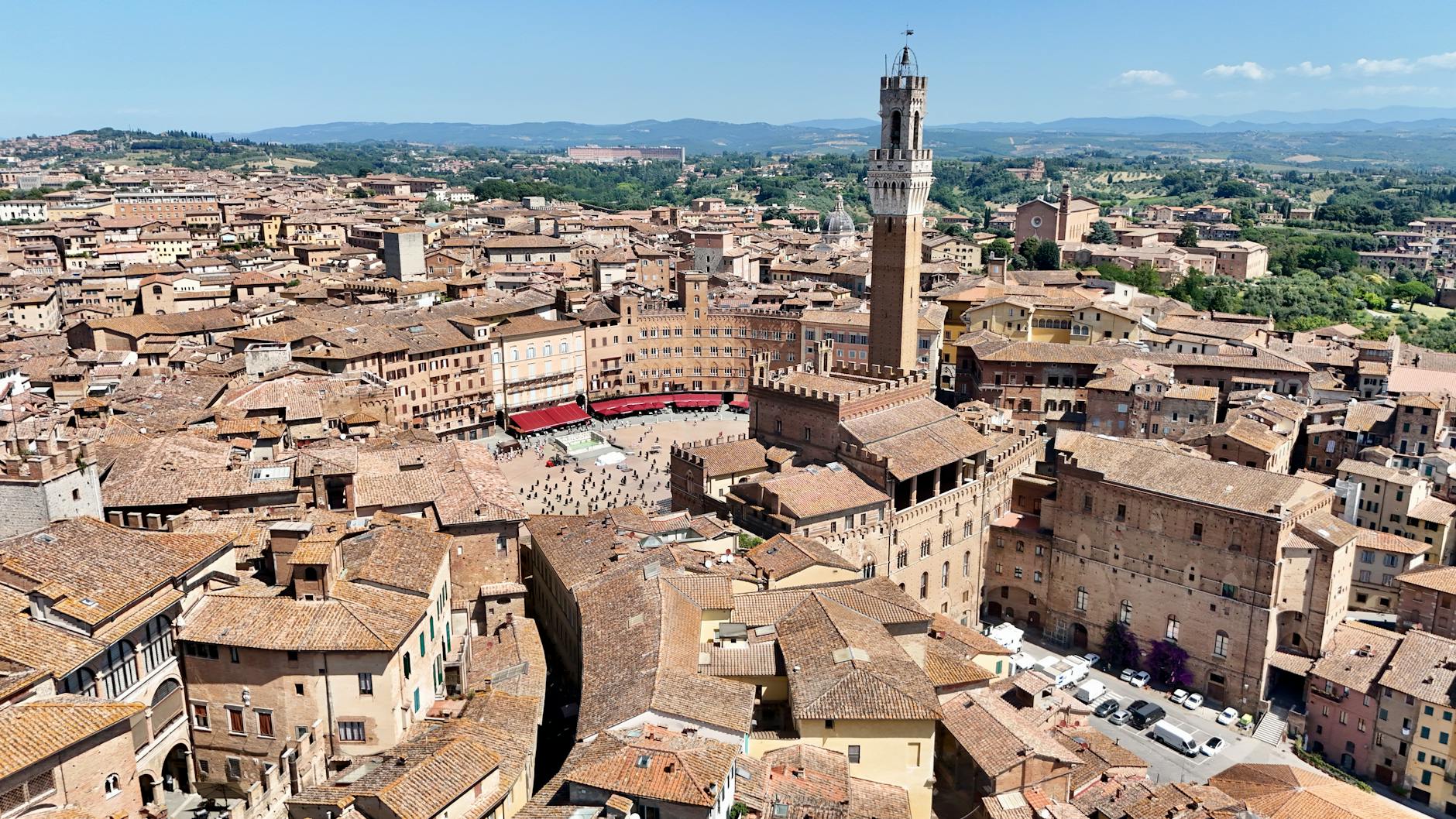
All roads in Siena eventually lead to Il Campo. The Piazza del Campo is one of Europe’s greatest medieval squares, famous for its unique shell shape. It slopes gently downward toward the Palazzo Pubblico, the town hall, creating a natural amphitheater.
This space defines the city. It acts as the civic and social core for the Sienese people. They do not just pass through it; they inhabit it. On any given afternoon, students, grandparents, and toddlers sit directly on the brick pavement. There are no benches, and none are needed. The slope makes it comfortable to recline and watch the sky change colors.
The Torre del Mangia stretches high above the square. Climbing it offers a view of the rooftops and the green countryside beyond, but staying on the ground offers a lesson in Italian culture. Life happens here in the open. Arguments, reunions, and courtships play out on the bricks. To understand Siena, one must spend at least an hour doing absolutely nothing in Il Campo. It is the living room of the city.
Art That Demands Patience
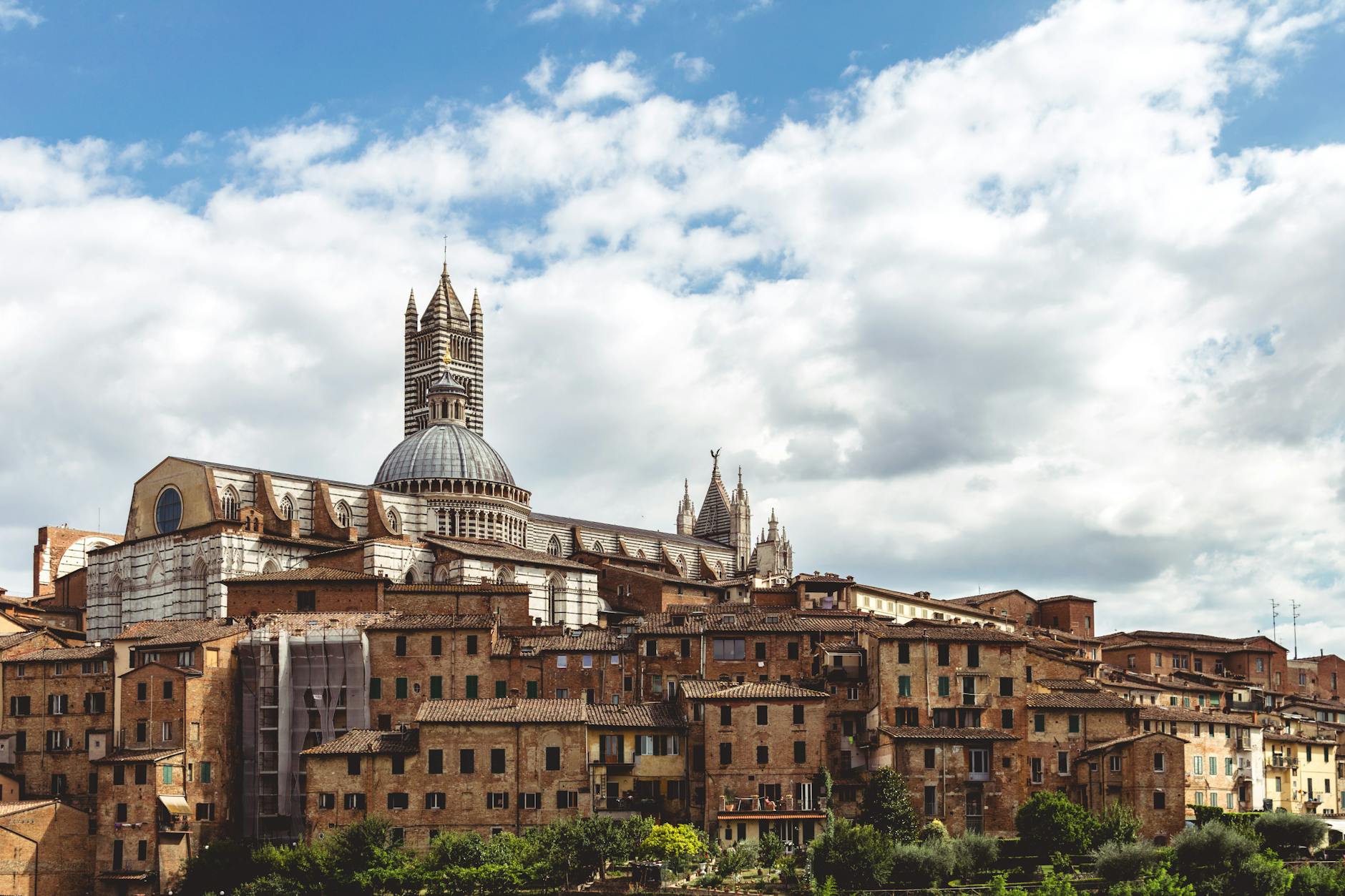
Just a short walk from the piazza stands the Duomo di Siena. From the outside, it is a striking display of black and white marble stripes, a nod to the symbolic colors of the city’s horses. But the interior is where the theme of slowing down becomes mandatory.
- The cathedral floor is a masterpiece that took centuries to complete
- Marble mosaic panels depict detailed biblical scenes and allegorical stories
- The artwork is designed on the floor, forcing visitors to look down and move slowly
- Large sections are often covered to protect them, but uncovered areas reveal intricate stone storytelling
- The Libreria Piccolomini above is filled with dazzling frescoes that remain vibrant after 500 years
- Every surface of the library is packed with patterns, faces, and symbolic details
- Moving too quickly through the Duomo can feel overwhelming due to the visual richness
- Sitting quietly and observing the space section by section allows the grandeur to fully settle
Getting Lost in the Contrade
Siena is divided into 17 wards, or contrade. These are not just administrative districts; they are tribal families. Each contrada has its own animal symbol, flag, church, and fountain. A Sienese person is born into their contrada, baptized in their contrada fountain, and remains loyal to it for life.
As visitors walk away from the main tourist hubs, they will notice small plaques on the walls. One street might feature a caterpillar (Bruco), the next a dragon (Drago), or a goose (Oca). These symbols mark the territory. Walking through the contrade offers a glimpse into a tight-knit community structure that has survived for hundreds of years.
Getting lost here is a pleasure. The tourist crowds thin out. Laundry hangs from windows, and the smell of roasting garlic wafts from open kitchen doors. In the contrade, the city feels less like a monument and more like a home. One might stumble upon a group of drummers practicing for a parade or a neighborhood dinner set up on long tables in the street. These moments are not scheduled for tourists. They are real life, continuing at its own steady rhythm.
A Culinary Pace Set by Tradition
Food in Tuscany is never fast, and Siena is no exception. The region’s cuisine relies on simple, high-quality ingredients that take time to grow and prepare. The signature pasta here is pici, thick, hand-rolled spaghetti often served with a wild boar ragu or a simple garlic and tomato sauce. Lunch is not a 20-minute refueling stop. It is an event. Restaurants, or trattorias, expect diners to linger. The waiters will not bring the check until asked, considering it rude to rush a patron out. This can frustrate Americans used to quick turnover, but it is an invitation to relax.
Why Siena is the True City of Love
Venice often claims the title of the most romantic city, but Siena makes a strong case for itself. The romance here is quieter, less performative. It is found in the way the streetlights cast long shadows on the brick walls at night. It is in the silence of a late-night walk when the day trippers have left and the city belongs to the residents.
The “City of Love” moniker fits because Siena preserves intimacy. The massive scale of Rome can make a person feel small and anonymous. Siena holds you close. The scale is human. Couples can find secluded corners in the botanical gardens or sit on the wall of the Medicean Fortress to watch the sun dip below the Tuscan hills.
Practical Ways to Embrace the Slow Pace
To truly slow down in Siena, strategy matters. Most tourists visit as a day trip from Florence. They arrive at 10:00 AM and leave by 5:00 PM. During these hours, the main streets are busy.
The secret is to stay overnight. The character of the city transforms after sunset. The stone streets cool down, and the locals come out for the passeggiata, the evening stroll. Staying within the city walls allows a traveler to wake up early, before the buses arrive. At 7:00 AM, the Piazza del Campo is empty save for street sweepers and pigeons. This solitude is worth the price of a hotel room.
Conclusion
Siena is not a destination that reveals itself through haste or checklists. It’s true character emerges in stillness, in quiet piazzas, unhurried meals, and streets that gently resist urgency. The city rewards those willing to slow their pace and observe rather than consume. In doing so, Siena offers something increasingly rare in modern travel: a chance to reconnect with time, place, and presence. It is this quiet intimacy, more than any landmark or view, that leaves the deepest impression and defines Siena as a city meant to be felt, not rushed.


 The Ranting Panda
Rant here!